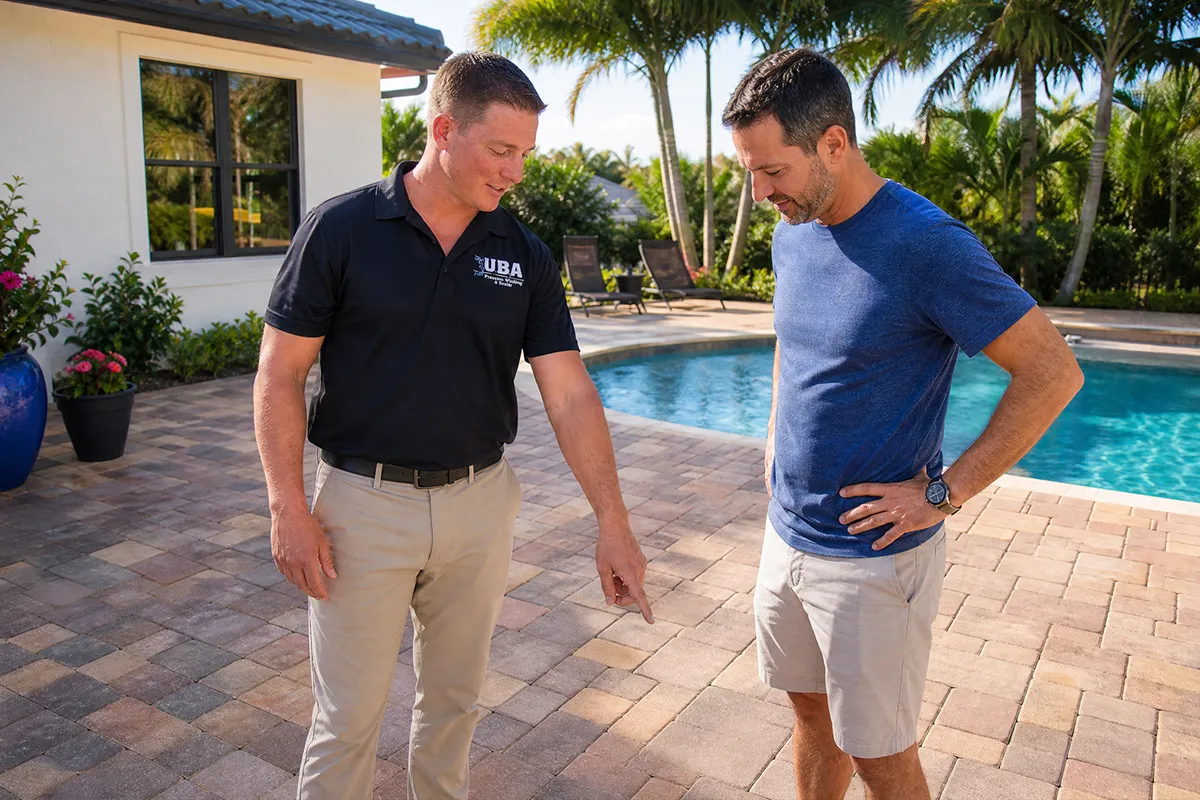
Site Assessment and Sealer Selection
Every paver job starts with a site visit. We walk the surface, identify the paver type or types, document the current condition, check for prior sealer applications (which complicate the work), and discuss what the homeowner wants the finish to look like. Some homeowners want enhanced color and a slight wet-look sheen. Others want the surface to look untreated. The sealer selection (water-based vs solvent-based, penetrating vs topical, Stain Guard alone or Stain Guard plus Slip Guard) follows from that conversation. We do not pick a sealer before we have walked the surface.
Pressure Cleaning and Surface Prep
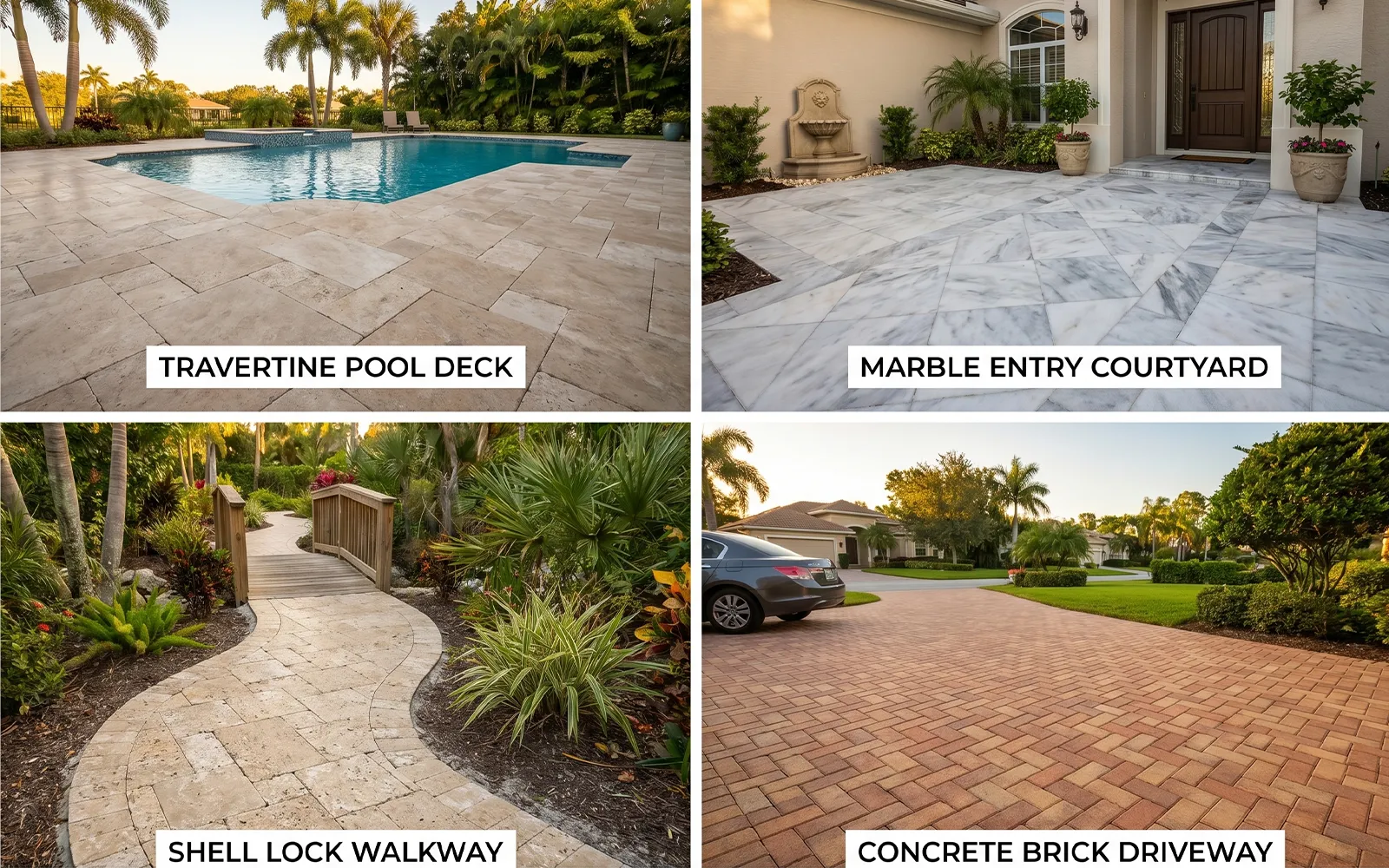
Pavers cannot be sealed over residual growth, oil staining, or efflorescence. The cleaning phase removes all of it. Concrete pavers tolerate moderate pressure (1,500 to 2,500 PSI) with appropriate tip selection. Travertine and marble are cleaned with much lower pressure and chemical assist to avoid surface damage. Joint sand that is lost during cleaning is replaced with fresh polymeric-free joint sand before the surface is allowed to dry. (See Section 6 on polymeric sand.) Oil and rust stains are spot-treated with appropriate removers before the general clean.
Drying Time
Pavers must be fully dry before sealer application. In Sarasota's humidity, this means 24 to 48 hours of dry weather between cleaning and sealing. We do not schedule sealing days when the 48-hour forecast shows more than 30 percent precipitation probability. If a weather delay occurs, the application is rescheduled without cost or inconvenience. Sealing a damp paver surface traps moisture under the coating, which causes white blushing and premature failure. We do not take that shortcut.
Stain Guard Sealer Application
Stain Guard is the primary penetrating sealer we use across most paver types. It bonds with the paver surface, blocks the porosity that holds stains and biological growth, and resists UV degradation. Application is roller, brush, or low-pressure spray depending on surface and access. We apply two coats with cure time between them on most concrete paver installations. Coverage is measured (not estimated) and documented on the work order.
Slip Guard Application Where Recommended
For pool decks, lanais, walkways, and any surface that gets wet routinely, we add Slip Guard as a top layer over Stain Guard. Slip Guard introduces a micro-texture that reduces surface slickness when wet. It does not change the look of the underlying sealer or paver color. The slip-resistance benefit is significant, particularly on travertine pool decks where the natural surface gets dangerously slick under water.
Cure and Walkthrough
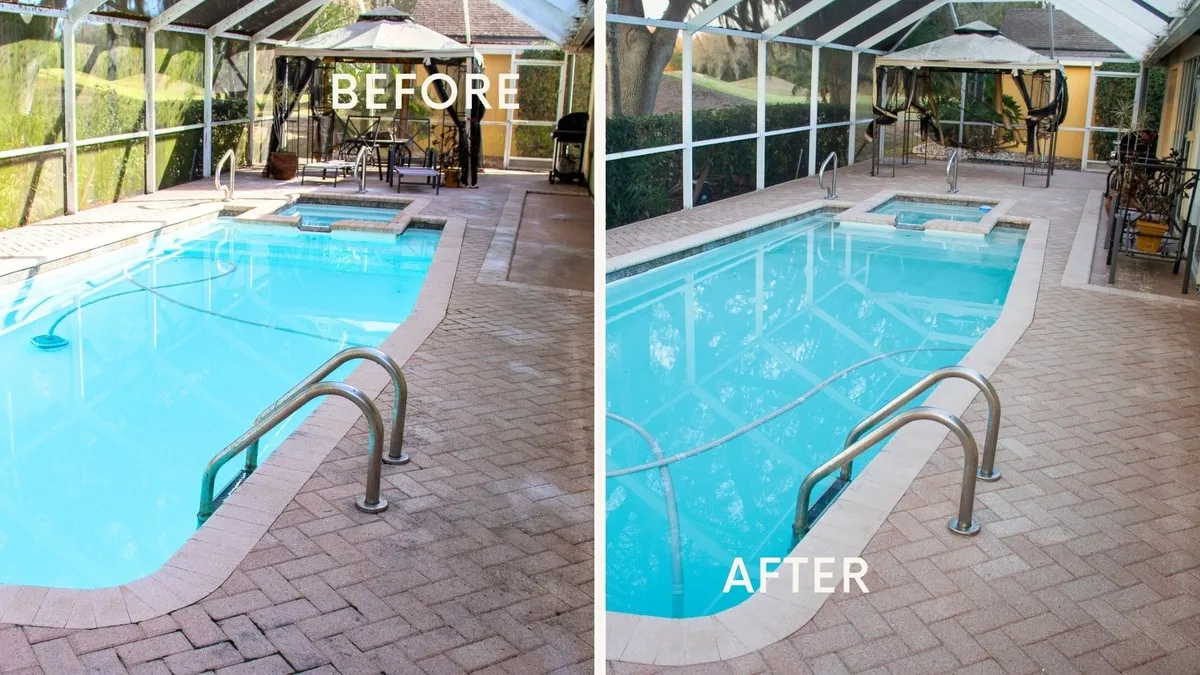
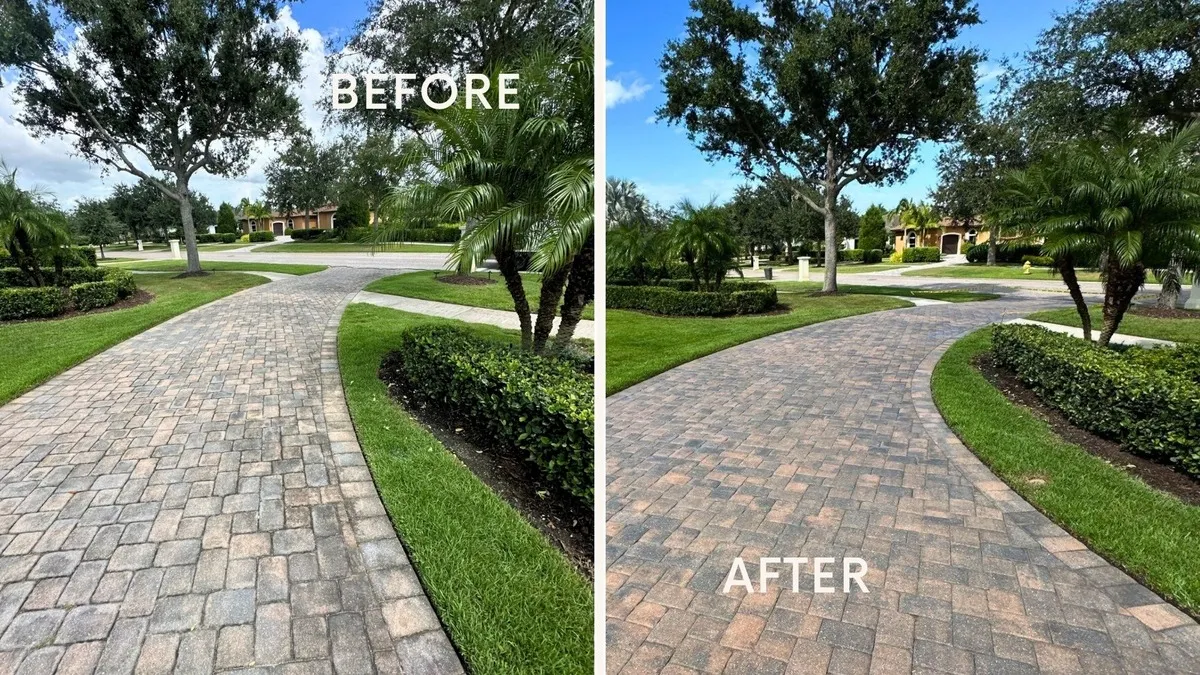
Cure time is 24 to 72 hours depending on sealer type and ambient conditions. We mark the property and provide written instructions for when the surface can be walked on, when furniture can return, and when full water exposure (pool use, sprinkler systems) can resume. The crew lead walks the property with the homeowner (or sends documentation if remote) at the completion of the job. Every paver job is documented with before and after photos.