Shade and Foot Traffic Create a Different Growth Pattern Than a Driveway
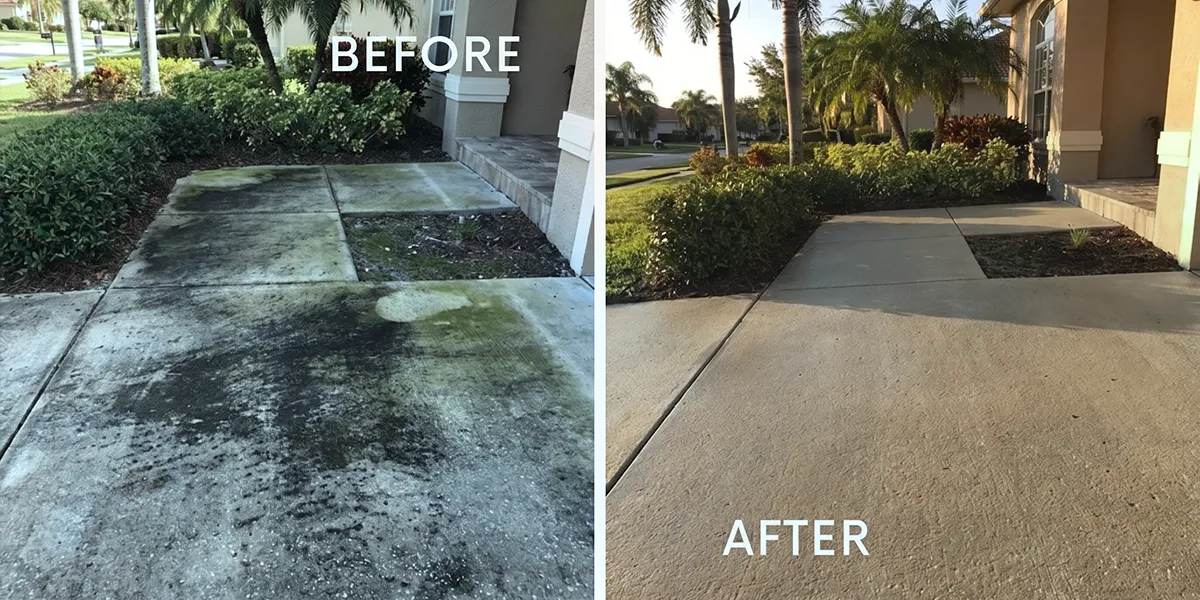
A sidewalk or front walkway usually sits closer to landscaping, gets less direct sun than a driveway, and holds moisture longer after rain or irrigation runoff. Foot traffic tracks grass clippings, mulch, and dirt onto the surface, which gives mold and mildew something to feed on that an open driveway rarely accumulates. Sprinkler overspray compounds the problem, since a walkway near a lawn zone gets wet on a schedule the driveway never does. That combination grows staining faster than the open concrete of a driveway, and it shows up as the black or green discoloration most homeowners notice first at the front entry, not the garage.
High Pressure Etches Concrete and Blows Out Paver Joints
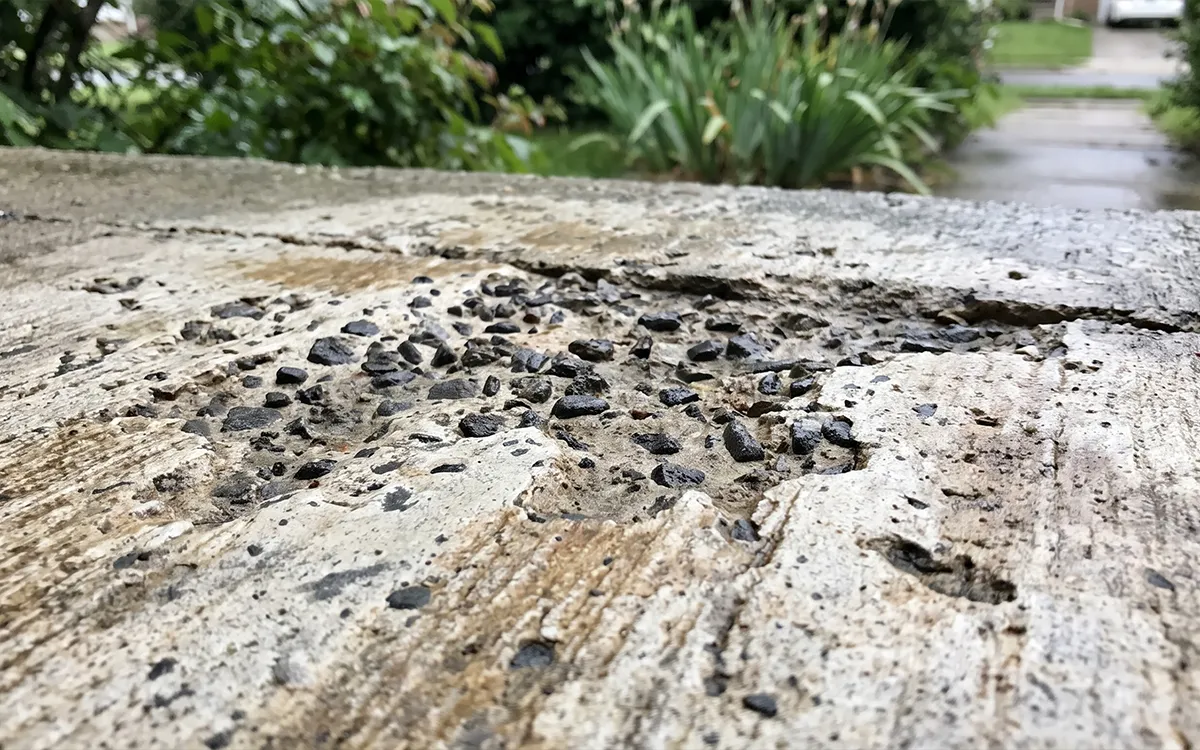
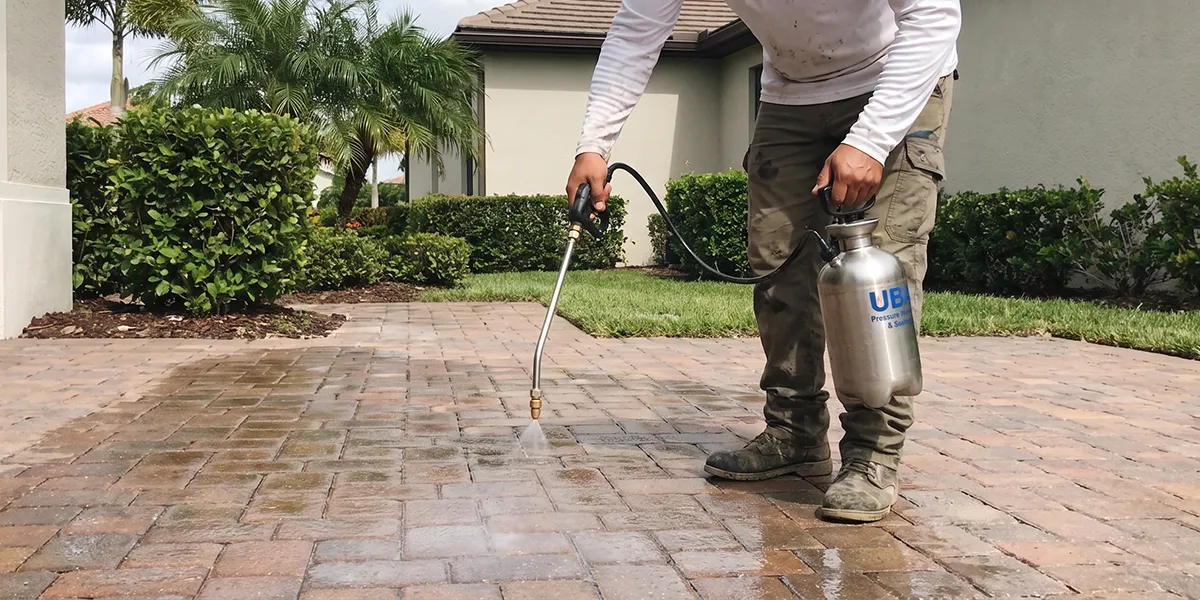
A standard pressure washer at 3,000-plus PSI can etch a visible pattern into plain concrete, since the concentrated water jet strips away the thin cement paste layer at the surface and leaves the rougher aggregate underneath exposed. On pavers, that same pressure blasts the joint sand out from between each unit, which then has to be replaced before the surface looks finished again. We soft wash sidewalks and walkways the same way we soft wash tile roofs: chemistry does the work, and the rinse pressure stays low enough that it cleans the surface without damaging what’s underneath.
Sarasota HOAs Often Cite Sidewalks Specifically
Front walkway staining is one of the most common HOA compliance notices we hear about at the intake call, more common than most homeowners expect, since it’s the most visible part of a property from the street. If you’re working against an HOA letter, we can usually get a walkway or sidewalk turned around fast, and we document the completed work in writing so you have something to show your association if they ask for proof.
How Often a Sidewalk Actually Needs Cleaning
It depends mostly on shade and irrigation exposure, not a fixed calendar. A walkway under tree canopy or hit by a sprinkler zone most days can show visible regrowth within about a year. A sun-exposed walkway with no overspray nearby can often go two years or more between cleanings. We will give you an honest read on your specific situation at the site visit rather than push a one-size cadence that does not match your property.