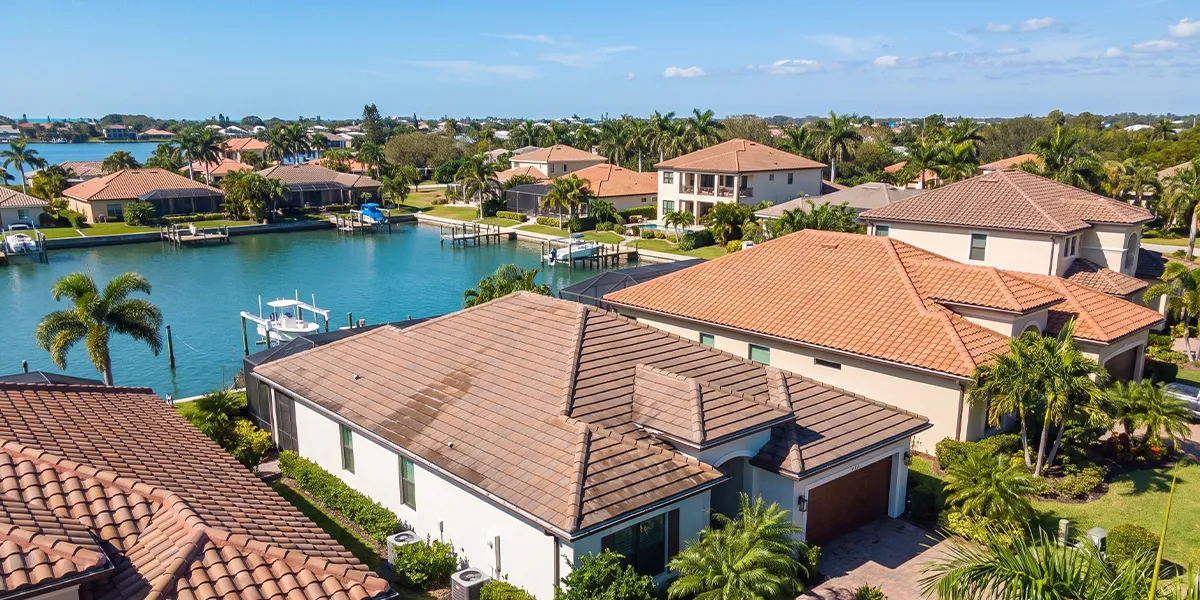
We’re Not Driving in From Somewhere Else
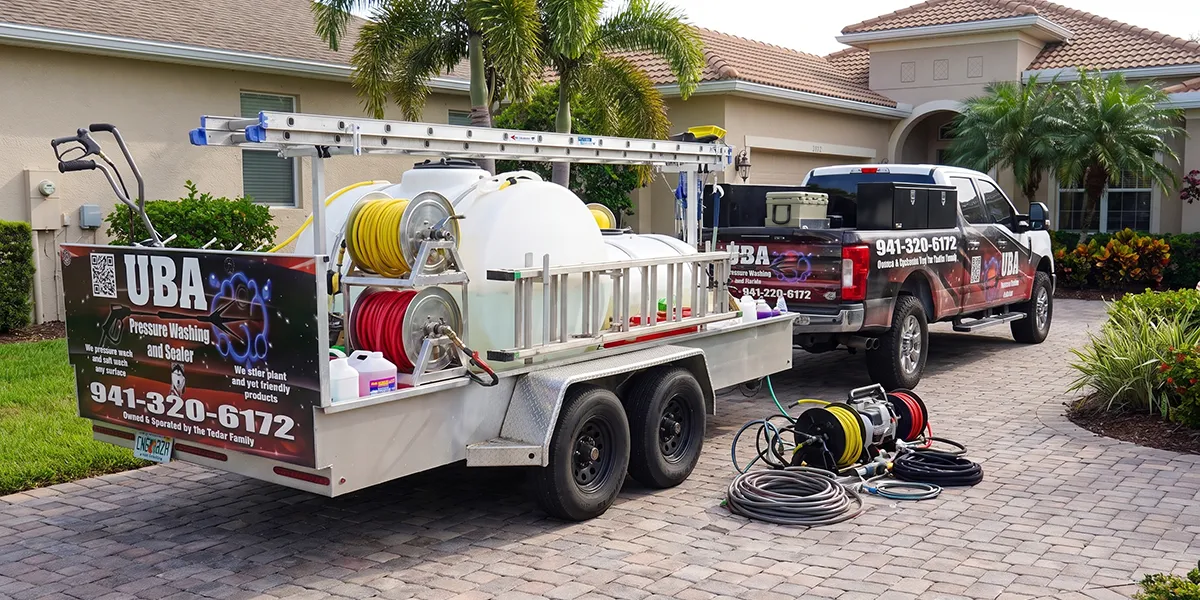
UBA runs a second property right in Bradenton, not just a service-area claim on a map. That means equipment staging, scheduling, and crew logistics for Bradenton jobs don’t depend on a truck making the drive up from Sarasota every time, and it’s part of why we can be responsive here instead of treating Bradenton like an afterthought market. A crew based nearby can usually fit a Bradenton job into the same week a call comes in, rather than waiting for a route that happens to pass through the area.
Waterfront Inlets Bring Their Own Growth Conditions
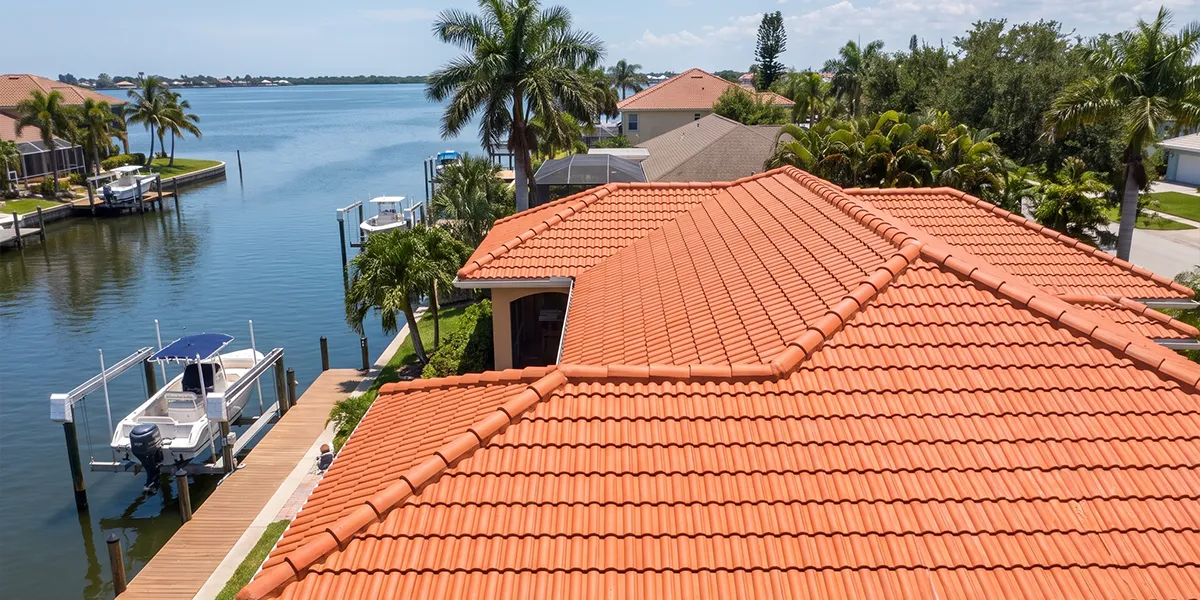
A lot of Bradenton’s tile roofs sit close to the water, along the inlets and canals that define a lot of the local housing stock, and that proximity means more humidity and salt-air exposure hitting the roof than a comparable inland home gets. Salt-laden air accelerates the biological growth cycle, since the moisture holds longer against the tile surface and the salt residue itself creates a slightly more hospitable surface for algae to establish. That combination is exactly the kind of variable we account for when we quote a job here instead of applying a one-size chemistry mix to every roof.
A Mixed-Age Housing Stock Means a Mixed Warranty Picture
Bradenton’s neighborhoods span a wider range of build decades than some of the newer master-planned communities in our service area, which means the manufacturer warranty conversation looks different from roof to roof. A tile roof installed in the early 2000s may have little or no warranty coverage left, while a newer build nearby could still have a decade or more remaining. We check warranty status at the intake call either way, because a roof with real coverage left is worth protecting with the correct cleaning method, and a roof past its warranty window still benefits from soft washing over pressure washing for the same underlayment-protection reasons.
Older Homes Near the Water Have More at Stake
An older tile roof on a canal-front lot is the combination where a wrong-method cleaning does the most damage, since the roof has less remaining warranty coverage to fall back on and the salt-air environment has already been working on the tile and underlayment longer than an inland roof of the same age. That’s the profile where we’re most conservative about recommending HydroLock over a standard cleaning, because a 5-year gap between cleanings on a roof already under that kind of environmental pressure is worth more than it would be on a newer, inland home.
Florida Tile Roofs Need Soft Wash, Not a Pressure Washer
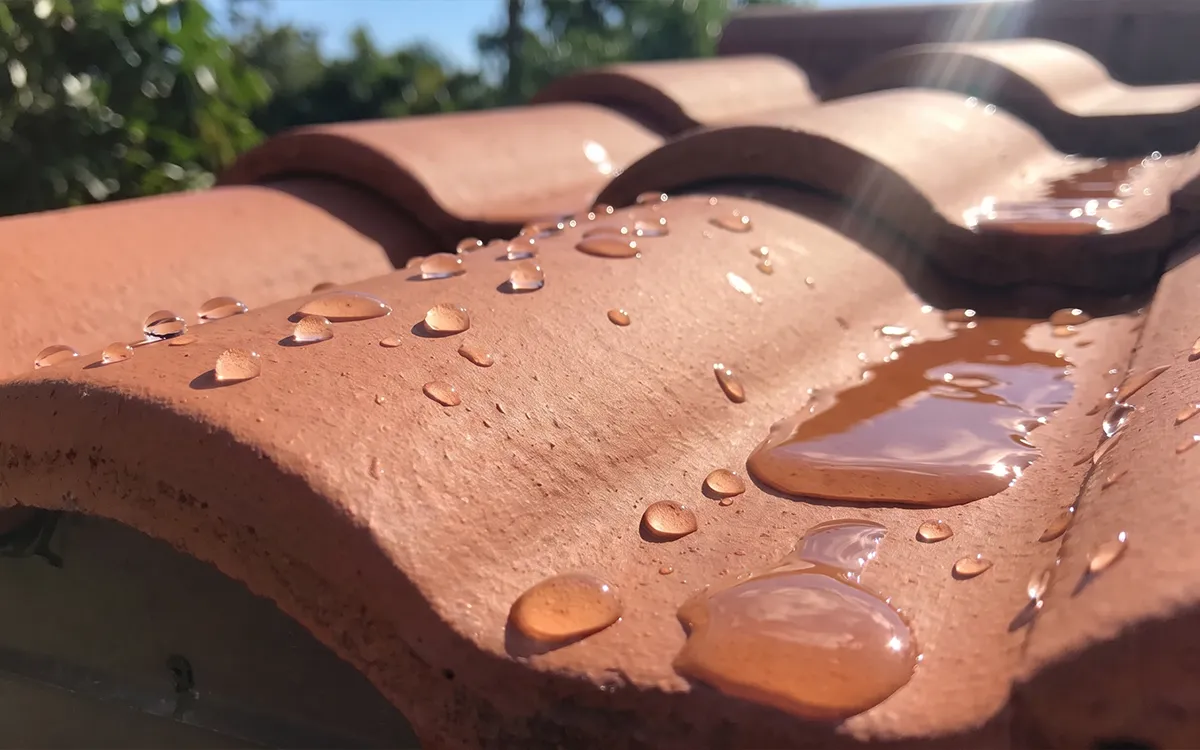
Standard pressure washing cracks barrel tile, strips granules off flat concrete tile, and can void a manufacturer warranty that specifies low-pressure or chemical wash maintenance. We soft wash every roof at 100 to 200 PSI instead, chemistry doing the cleaning rather than force, which is the method Florida tile manufacturers and the Asphalt Roofing Manufacturers Association actually call for.
We cover the full technical breakdown of the soft wash process on our dedicated roof soft washing page, if you want the deeper read. Here, the short version is what matters: the method is the difference between a roof that stays clean and one that needs a repair conversation two years from now.