
UBA Pressure Washing
& Sealer · Sarasota, FL
(941) 320‑6172
Free Quote →
Florida’s next code edition is scheduled for the end of 2026, and most of what changes for a tile roof is not what homeowners are being told. Here is the verified version.
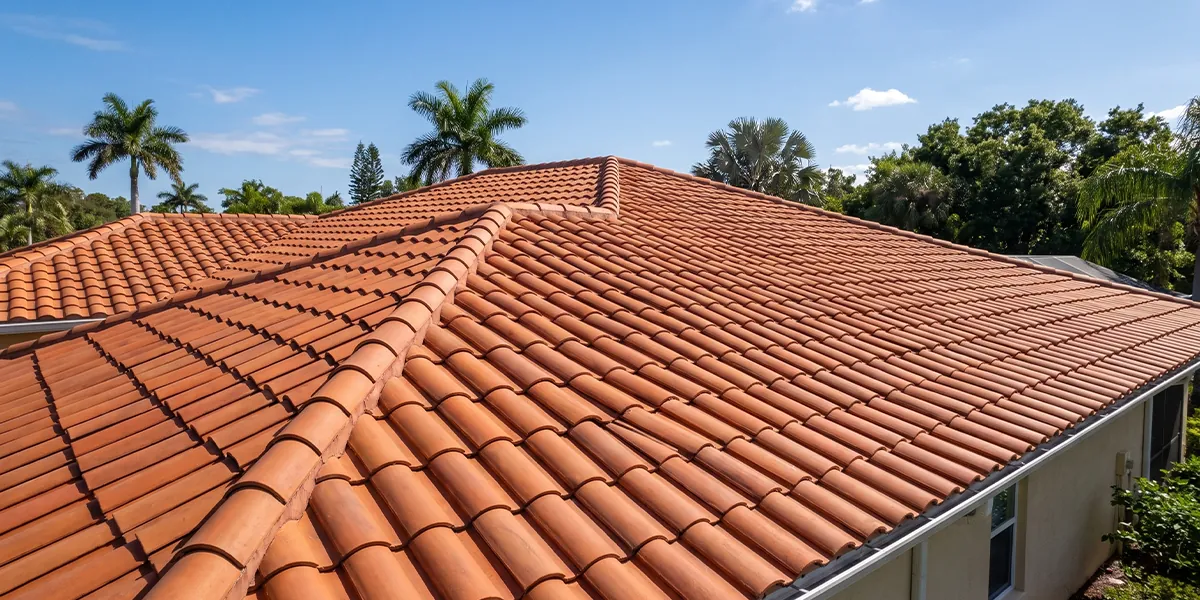
Almost every 2026 Florida building code tile roof question we field starts from the same wrong premise, which is that the new code is already running. The Florida Building Code, 8th Edition (2023) took effect on December 31, 2023, and it is what your local building department enforces today. The Florida Building Commission publishes the current edition and its effective date directly, so if someone tells you your roof is out of compliance with a code that has not taken effect yet, that is worth a second question.
The 9th Edition is scheduled to take effect December 31, 2026, and Florida’s roofing trade association has been publishing the pending changes ahead of that date. The word “scheduled” is doing real work there, since the state’s own code site does not yet show a final adoption notice, so the honest answer in August 2026 is that the date comes from the industry rather than the commission. Either way the practical consequence for a homeowner is small, because a code edition governs work permitted after its effective date rather than reaching backward into roofs already on houses.
Here is the part that surprises people. Tile roofs outside the High Velocity Hurricane Zone follow the FRSA/TRI Florida High Wind Concrete and Clay Roof Tile Installation Manual, currently in its Seventh Edition, and the 9th Edition is set to keep referencing that same Seventh Edition rather than replacing it. The HVHZ covers Broward and Miami-Dade counties only, so Sarasota and Manatee sit in the other 65 counties where the FRSA/TRI manual governs. If you have read that the 2026 code rewrites tile attachment or corrosion standards, that claim does not survive contact with what the trade association itself is publishing.
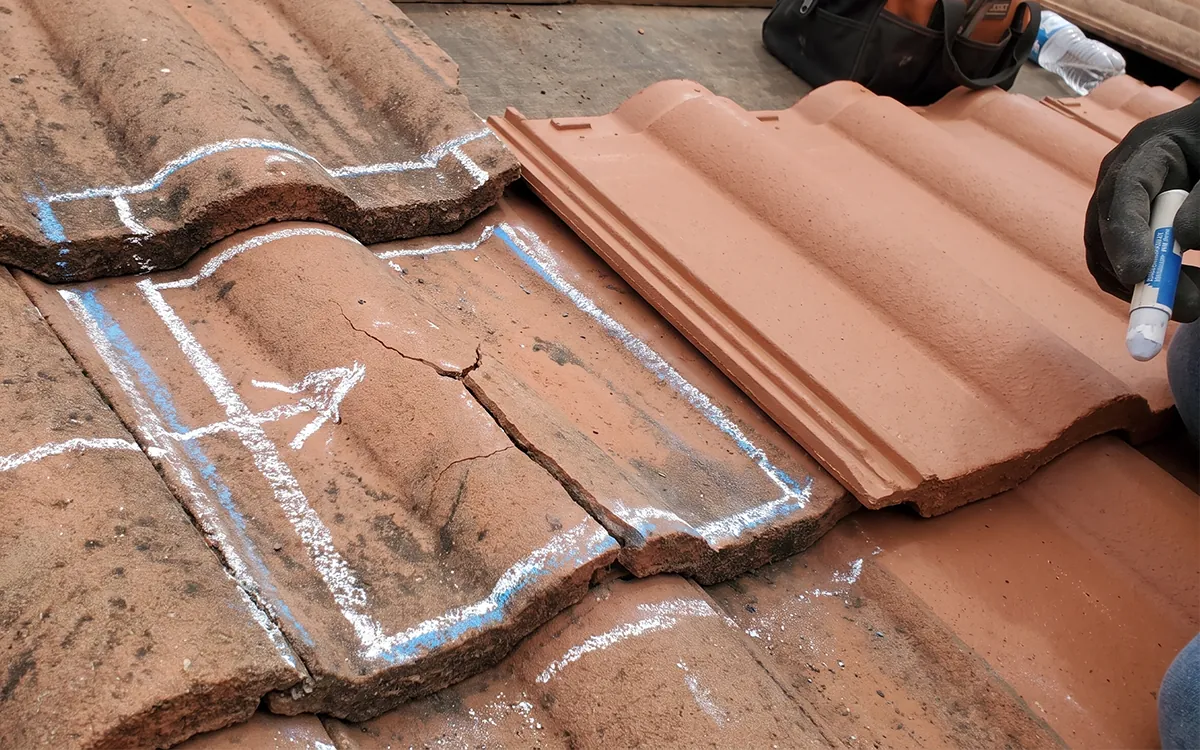
Florida’s existing building code sets a threshold that gets quoted constantly and understood rarely: not more than 25 percent of the total roof area or roof section may be repaired, replaced, or recovered in any 12-month period unless the roof covering on the entire roof system or section is brought up to current code. Read alone, that reads like a trap, because it implies a moderately sized repair forces a full replacement.
Read alone is the problem, since the statute carries an exception that swallows most of the rule for modern roofs. Florida Statute 553.844 provides that if the roofing system or section was built, repaired, or replaced in compliance with the 2007 Florida Building Code or any later edition, then only the repaired, replaced, or recovered portion has to meet the current code, even when the work crosses 25 percent. The practical translation is that a roof permitted under the 2007 code or anything after it is generally repairable in sections without triggering a full-system upgrade, and older roofs are where the 25 percent threshold still bites.
What decides which side of the exception you land on is the date your roof was permitted, not the date it looks like it was built, so pulling the permit record from your county before approving a partial repair is a fifteen-minute task that occasionally saves a five-figure decision. Sequencing matters too, since cleaning and sealing a section about to be torn off is wasted money.
We went looking for one specifically to write this post, and there is no section of the Florida Building Code and no Florida statute that governs roof cleaning, soft washing, or pressure washing a roof. The absence is the finding, and it is worth stating plainly because a fair amount of marketing in this industry implies a compliance obligation that does not exist. Nobody is going to cite you for algae.
Coatings do appear in the code, but every provision we could locate addresses asphalt shingles or spray polyurethane foam. The existing building code’s coating exception points at elastomeric and maintenance coating systems applied over existing asphalt shingles and defers to the shingle manufacturer’s instructions, and the HVHZ chapters that restrict coatings restrict them over composition shingles. There is no parallel code provision for coating or sealing a concrete or clay tile roof, which means the decision sits outside the code entirely.
With the code silent, three things actually constrain the choice: your tile manufacturer’s warranty terms, your local jurisdiction’s permit rules for exterior coating work (set locally and not uniform across Florida, so Sarasota County and Manatee County should each be checked rather than assumed), and the physics of what any coating does to moisture movement under the tile. A coating that blocks vapor entirely can trap condensation against the underlayment underneath, and underlayment, not the coating on top of it, is the layer doing the actual work of keeping water out of your house. Vapor-permeable coating design exists specifically to avoid that tradeoff, which is a materials-science distinction worth asking about regardless of which crew you hire. HydroLock is one tile sealer built around that vapor-permeable principle, if you want the fuller explanation of how that category of product is engineered. So the real 2026 Florida building code tile roof question turns out to be a product-design question, not a compliance one.
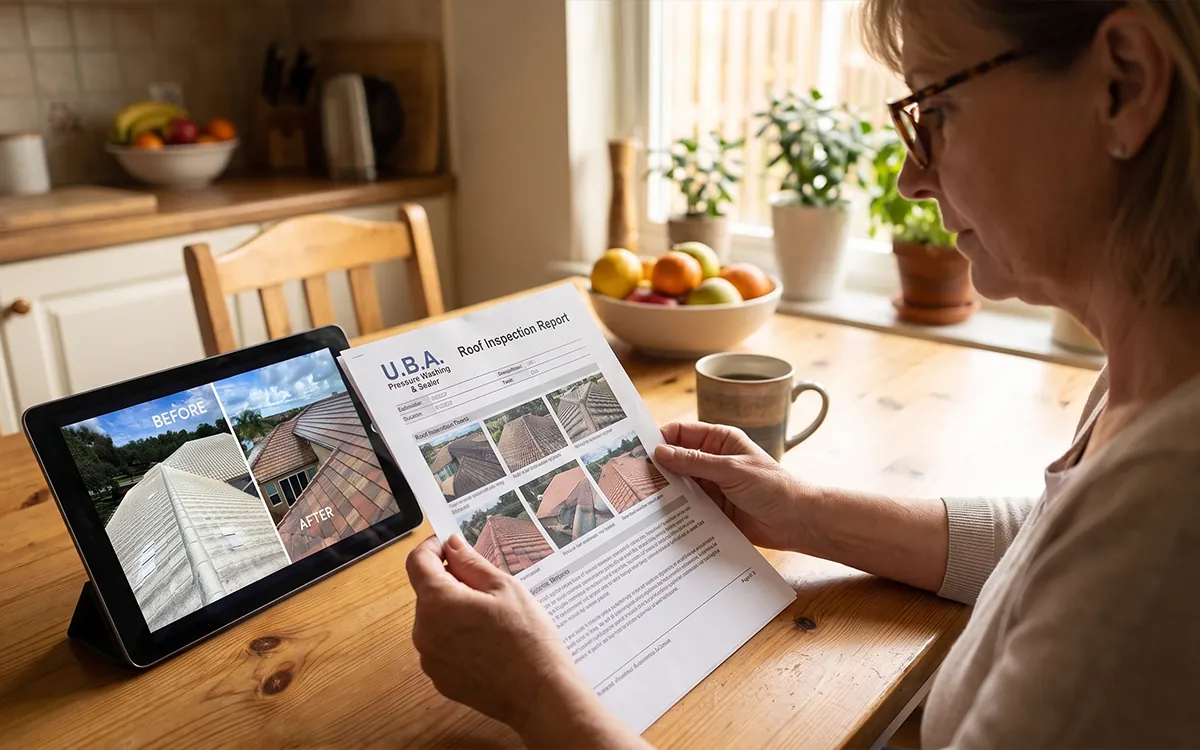
For most Sarasota and Manatee homeowners, the rules that actually change behavior are insurance rules, not code. Florida Statute 627.7011 provides that an insurer may not refuse to issue or renew a homeowner’s policy solely because of roof age when the roof is less than 15 years old. Once a roof passes 15 years, the insurer has to let you obtain an inspection by an authorized inspector before requiring replacement, and if that inspection shows the roof has five or more years of useful life remaining, roof age alone still cannot be the basis for refusal. These provisions apply to policies issued or renewed on or after July 1, 2022.
The statute defines roof age from the last date on which 100 percent of the roof’s surface area was built or replaced. Partial replacements, section repairs, and re-covers do not reset that clock, so a roof that has had significant work done can still be carrying its original age on paper. Homeowners routinely get this wrong in both directions, and the fix is the same either way: find the permit and the invoice before renewal season rather than during it.
The Uniform Mitigation Verification Inspection Form, OIR-B1-1802, was revised for the first time since January 2012, and inspections performed on or after April 1, 2026 have to use the new revision. The form documents roof covering, roof deck attachment, roof-to-wall attachment, roof geometry, secondary water resistance, and opening protection, and the update added performance-based options for roof-to-wall attachments. A completed form stays valid for up to five years as long as no material changes are made to the structure and no inaccuracies turn up, so if yours predates the revision it is worth checking the date on it.
Two 2026 bills, HB 815 and its Senate companion SB 808, would have extended the roof age protections to all residential property policies and drawn a distinction between low-slope and steep-slope roofs. Both died in committee on March 13, 2026. Several sites are still describing those provisions as though they took effect, so if you have seen a July 2026 date attached to new roof insurance rules, that is coverage of a bill that never passed.
House Bill 715, signed May 19, 2025 and effective on approval, expanded what a licensed roofing contractor may do. Roofers can now evaluate and improve roof-to-wall connections, the hurricane straps and clips tying the roof structure to the walls, in conjunction with a roof covering replacement or repair on wood roof decking. That work previously sat outside their license, so the one moment when the deck is exposed and the connections are visible was also the moment nobody on site was permitted to touch them.
The same bill added a requirement that is easy to spot: a residential roofing contract now has to carry a bold 14-point notice telling you to contact your insurer to verify coverage for the proposed work. A roofing contract handed to you in Sarasota or Manatee County without that notice is not current with Florida law, which is a reasonable thing to raise before signing.
Florida’s structural integrity reserve study requirement under Statute 718.112 applies to condominium and cooperative buildings three habitable stories or higher, and the roof is the first component the statute lists as mandatory, ahead of load-bearing walls, plumbing, and electrical. Associations must complete the study at least every 10 years, which turns roof condition and roof reserves from a discretionary board conversation into a documented, funded line item.
The milestone inspection requirement under Statute 553.899 gets mentioned in the same breath and covers something different. It applies to condominium and cooperative buildings three habitable stories or more, is due by December 31 of the year the building turns 30, and repeats every 10 years, but its scope is load-bearing elements and primary structural systems. The statute does not name roof coverings, so a milestone inspection is not a roof inspection, and treating it as one leaves a real gap. None of this reaches single-family homes, HOA or not.
Pull the permit record and find the last date 100 percent of the surface was replaced, because that single date determines whether the 25 percent exception protects you on repairs and whether roof age can be used against you at renewal. Doing this in February is administrative, and doing it in the middle of a non-renewal notice is not.
Algae, moss, and lichen are not a code issue, but they show up in inspection photographs and they read as deferred maintenance to anyone evaluating the roof’s remaining useful life. Regular roof soft washing keeps a tile roof presenting the way its actual condition warrants, and in the neighborhoods we work most often across Sarasota, Bradenton, and Lakewood Ranch that presentation gap is frequently the difference between a clean inspection and a conversation.
UBA cleans and seals tile roofs, and we are not your roofing contractor. Structural repair, tile replacement, underlayment work, deck attachment, and anything requiring a permit belongs to a licensed roofing contractor, so if an assessment turns up a compromised deck or failing underlayment, the sequence is repair first and sealing after. We would rather tell you your roof needs a roofer than sell you a coating over a problem.
No. The 8th Edition (2023) has been in effect since December 31, 2023 and is what your building department enforces today. The 9th Edition is scheduled to take effect December 31, 2026.
Not based on anything published. Tile installation outside the High Velocity Hurricane Zone follows the FRSA/TRI Florida High Wind Concrete and Clay Roof Tile Installation Manual, and the 9th Edition is set to keep referencing the same Seventh Edition of that manual.
Usually no, if the roof was permitted under the 2007 Florida Building Code or later. Florida Statute 553.844 lets you bring only the repaired portion up to current code in that case, even past the 25 percent threshold. Older roofs are where the 25 percent rule still bites hardest, sometimes forcing a full-system upgrade, so the permit date is the number that matters.
Not on age alone if the roof is under 15 years old. At 15 years or older, you are entitled to an inspection first, and if it shows five or more years of useful life remaining, age by itself still is not grounds for refusal.
From the last date 100 percent of the roof’s surface area was built or replaced. Section repairs and partial replacements do not reset it.
Permit rules for exterior coating and resealing work are set locally rather than statewide, so the answer depends on your jurisdiction. Sarasota County and Manatee County should each be checked directly rather than assumed from what applies elsewhere in Florida.
No. There is no code section and no statute covering roof cleaning, soft washing, or pressure washing.
A completed OIR-B1-1802 form is valid up to five years provided the structure has not materially changed and no inaccuracies are found. Inspections done on or after April 1, 2026 use a new revision of the form, the first update since January 2012, so check the date on yours.
Only if you are in a condominium or cooperative building three habitable stories or higher. Single-family homes are outside the requirement, HOA or not, and the inspection covers structural elements rather than roof covering anyway.