Pool Cage Cleaning That Protects the Frame, Not Just the Screens

UBA cleans the screens, the frame, and the deck in one visit, then treats the aluminum with a UV ray compound that doubles the working life of the factory paint.

Request a Free Quote 4.9 · 410+ Google Reviews
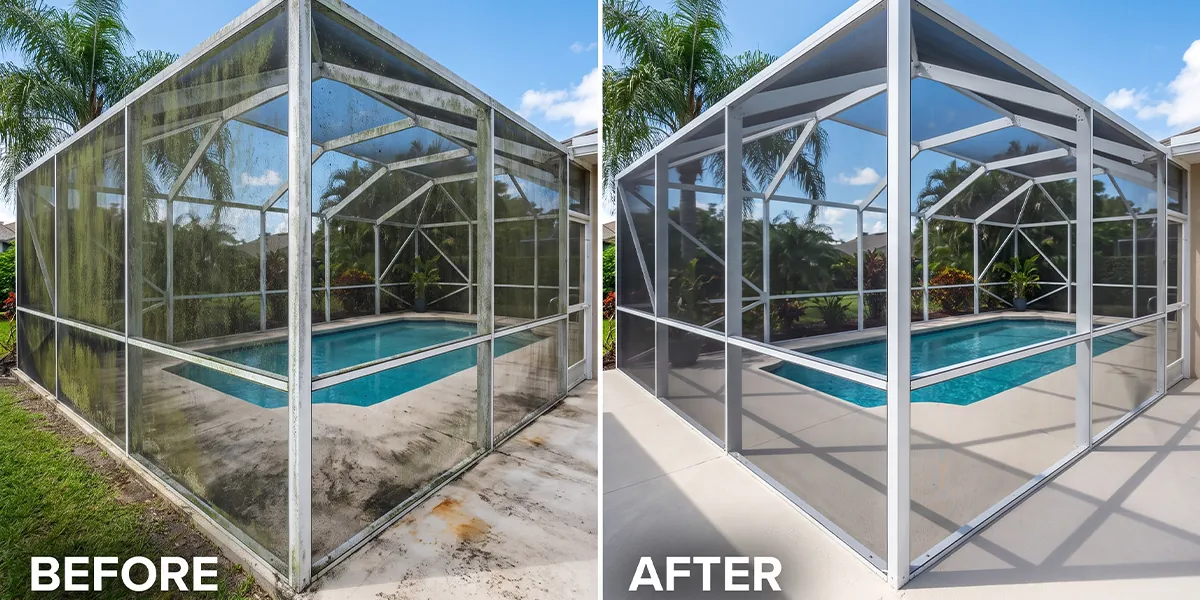
Florida pool cage after UBA pool cage cleaning with clear screens and a clean painted frame
Rated 4.9 Across 410+ Google Reviews
Soft Wash Chemistry, Never High Pressure
UV Ray Compound on Every Frame
Deck, Cage, and Lanai in One Visit

What a Florida Screen Enclosure Is Actually Fighting

Most homeowners call about the screens, because that is the part you look through every day. The screens are rarely the expensive problem, and by the time the mesh looks obviously green the frame has usually been losing paint for a couple of seasons already.

Reason 1

Algae and Mildew Live Inside the Mesh, Not On Top of It

Screen mesh is woven, so every intersection of the weave is a small sheltered pocket that holds moisture after rain and after every irrigation cycle that drifts across the cage. Algae and mildew settle into those pockets and grow outward, which is why a cage can look passable from ten feet away and clearly discolored from three. Rinsing the surface knocks down the color for a few weeks without touching what is living in the weave, so the growth comes back looking worse than it did before the rinse.

Reason 2

The Painted Frame Is the Part That Quietly Fails

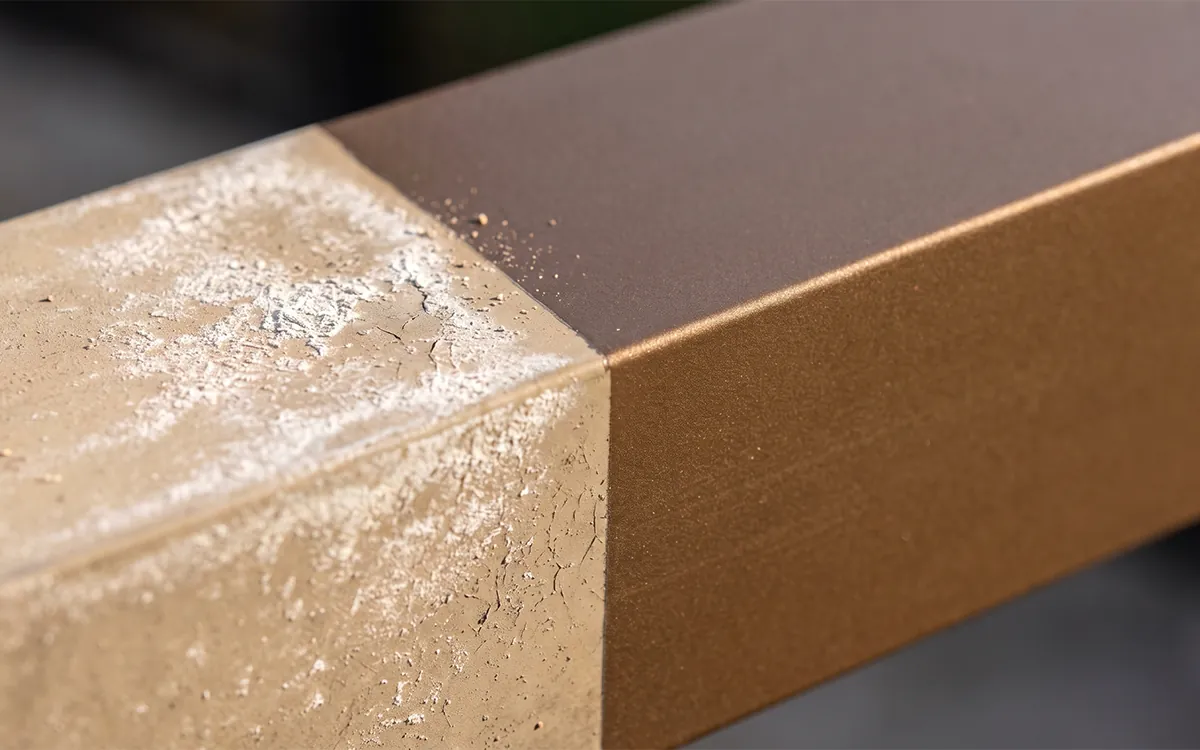
The aluminum extrusions that hold your cage together carry a factory paint finish, and Florida sun breaks that finish down through simple UV exposure. The first stage is chalking, a fine powdery residue that comes off on your hand when you run a finger along a beam. After chalking comes fading, then localized corrosion where the bare aluminum is exposed at fastener points and cut ends. None of that reverses on its own, and repainting a cage in place is a considerably larger project than cleaning one.

Reason 3

Debris Load Is Heavier Than Homeowners Expect

Between oak pollen in spring, pine needles year-round, and whatever a storm season drops on the panels, the horizontal top screens on a Florida cage collect a surprising amount of organic material that then sits there feeding growth and holding water against the frame. Several of our customers had piles up on the roof panels they could not see from the deck and had no safe way to reach.

Reason 4

What Another Season of Waiting Actually Changes

Waiting one more year on a dirty cage mostly costs you the view, and that is a fair trade if the budget is not there. Waiting three or four years is a different calculation, because that is roughly the window in which chalking turns into visible fade and fastener-point corrosion on an untreated frame in full sun. We will tell you honestly at the walkthrough which of those two situations you are actually in, and we have told plenty of homeowners their cage could wait a season.

The UV Ray Compound That Doubles the Working Life of Your Cage Paint

This is the part of the job that separates a cage cleaning from cage maintenance, and it is the reason we treat the frame as seriously as the mesh. Cleaning removes what grew this year. The compound is what slows down the clock on the finish underneath.

UV ray compound applied to a painted aluminum pool cage frame to slow paint oxidation
Compound 1

Why the Paint Is the Expensive Half of a Screen Enclosure

Screen mesh is a consumable. It is replaceable panel by panel, screeners do it routinely, and a torn panel is an inconvenience rather than a crisis. The painted aluminum structure is the part with real money in it, since refinishing a cage frame in place means masking the pool, the deck, and every plant inside the enclosure, then working around a structure you cannot disassemble. Anything that meaningfully extends the life of that finish is worth more to the homeowner than anything done to the mesh.

Compound 2

What the UV Ray Compound Does After the Cleaning

Once the frame is clean and dry, we apply a UV ray compound across the painted aluminum. It leaves a protective layer over the finish that takes the ultraviolet load the paint would otherwise absorb directly, which is what slows the chalking and fading cycle described above. In UBA’s experience across Sarasota and Manatee, that treatment doubles the working life of the factory paint on a cage frame. That is the single claim we make about it, and it is the one Josh and the crews stand behind.

Compound 3

Reapplied Once a Year, and We Say So Up Front

The compound is reapplied annually. We would rather put that in writing on a public page than let a homeowner discover it in year two and feel sold to, because the annual cadence is what makes the math work in the first place. It rides along with whatever else is already on the calendar, and most of our customers fold it into the same visit as a roof cleaning or a paver reseal rather than booking it on its own.

Why High Pressure Is the Wrong Tool on a Screen Enclosure

Almost every homeowner who calls us has watched somebody run a pressure washer across a cage, either at their own house or at a neighbor’s. The result looks fine on the day. What it does to the mesh and to the fasteners shows up later.

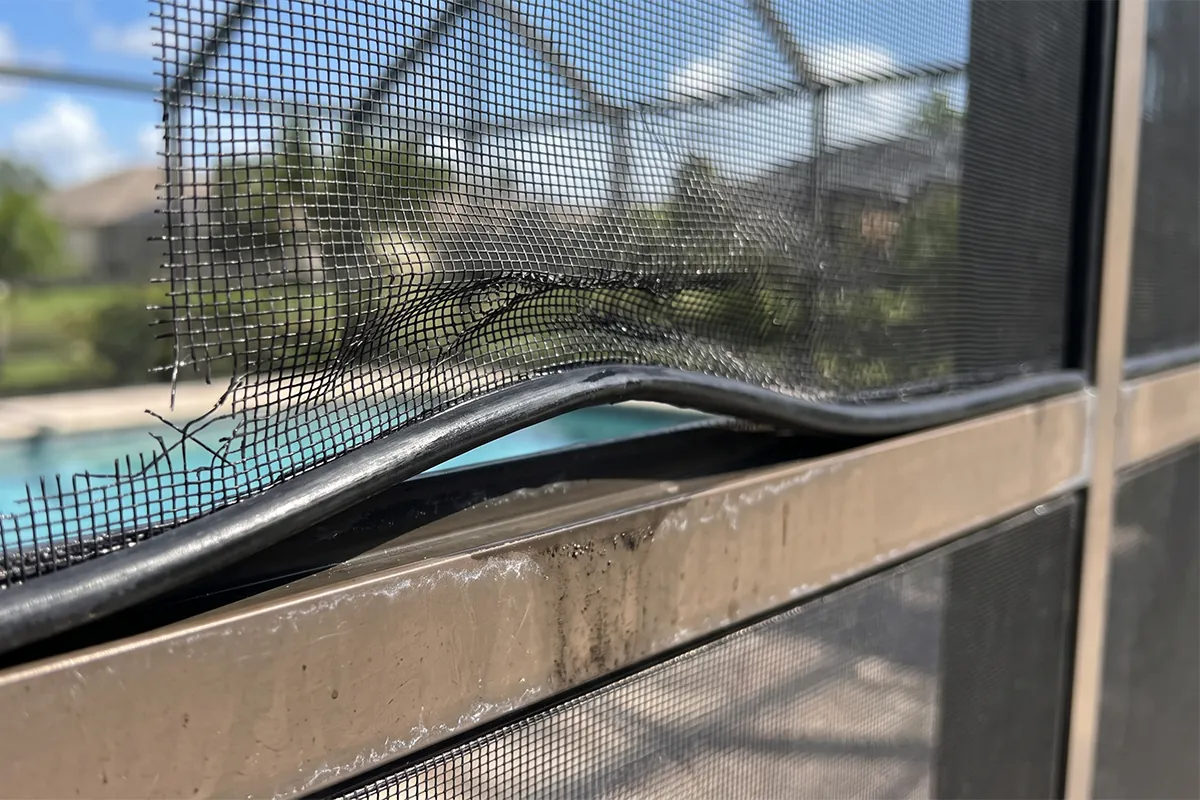
Pool cage screen and frame damage caused by high-pressure washing, stretched mesh and lifted spline

What a 3,000 PSI Wand Does to Screen Mesh

Standard pressure washing equipment runs somewhere between 2,500 and 3,500 PSI at the wand, and screen mesh is not built to absorb that. The jet stretches the weave where it hits, pushes the mesh out of plane against the spline that holds it in the frame channel, and on older sun-brittled screening it tears outright. Blown spline is the classic tell: the panel looks clean and slightly loose, then it bellies out the first time a storm pushes on it.

What It Does to Fasteners and Frame Joints

A screen enclosure is a permitted structure in Florida with real fastener and wind-load requirements behind it, which is why the connections matter more than the appearance. Driving high-pressure water directly at the screw and washer points forces moisture past the fastener heads and into the joint, and on a frame that is already chalking, that is exactly where corrosion starts. Cage manufacturers and screen contractors are consistent on this point, and Florida Building Code Online is the public reference for what your enclosure was actually engineered to take.

The Two Approaches, Side by Side

Here is the practical difference on the same cage, on the same afternoon.

The High-Pressure Approach

  • 2,500 to 3,500 PSI delivered to woven mesh and fastener points
  • Stretched weave and blown spline, often not visible until the next storm
  • Water driven past screw heads into the frame joint
  • Surface algae knocked off, growth in the weave left alive
  • Nothing at all done for the painted finish
  • Regrowth typically visible within a few months

The UBA Soft Wash Approach

  • Chemistry does the cleaning, rinse pressure stays low
  • Mesh, spline, and fastener points left the way we found them
  • Growth killed inside the weave rather than knocked off the surface
  • Frame cleaned, dried, then treated with the UV ray compound
  • Pool water, plantings, and deck surface protected as part of the standard protocol
  • Written documentation of the scope and the condition notes we found

Why This Comes Up at Almost Every Walkthrough

Cage work is where we most often follow somebody else, and the previous job is usually still readable on the structure: a run of stretched panels along one wall, spline sitting proud of the channel, corrosion tracking down from a screw line. We do not name the company and we do not make it a sales pitch. We point out what we can see, note it in the walkthrough summary, and quote the cage in front of us rather than the one it used to be.

Deck, Cage, and Lanai Cleaned as One Sequenced Job

A pool area is one enclosed system, and cleaning a third of it well is how you end up looking at the other two thirds every evening. When homeowners book the cage on its own, the deck underneath it is almost always the next call.

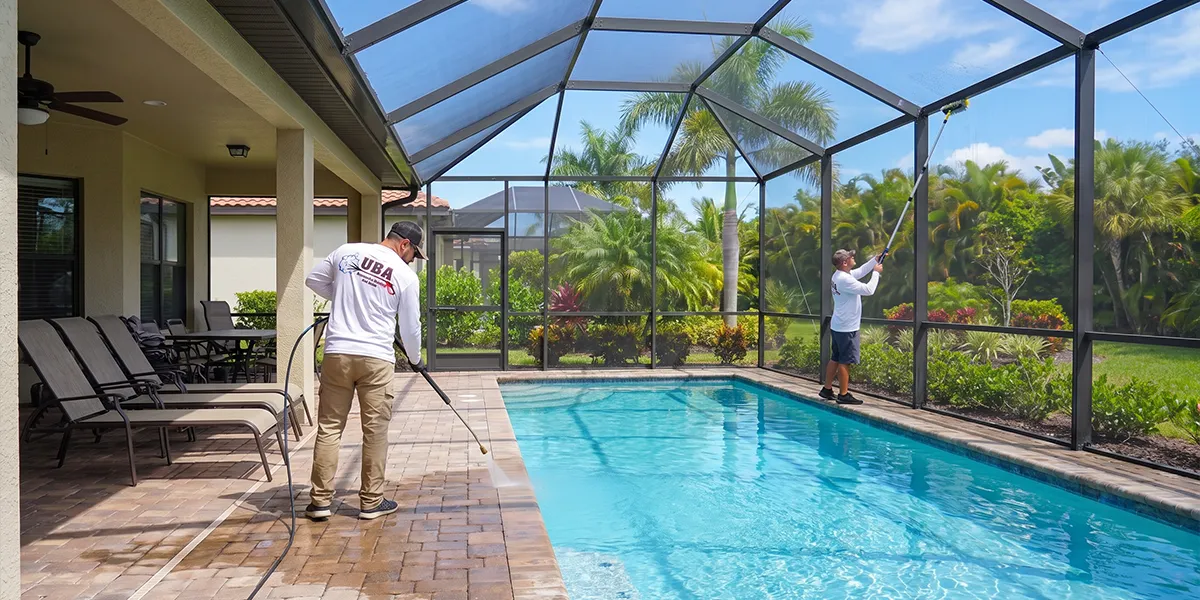
UBA crew cleaning a Florida pool deck, cage, and lanai together in one sequenced visit

The Order of Operations Is Half the Job

Everything that comes off the cage lands on the deck, so the cage gets cleaned before the deck does, top screens first, then the vertical panels, then the frame, then the surface underneath. Getting that order wrong means either doing the deck twice or handing the homeowner a clean cage over a streaked deck. It sounds obvious written down. It is also the single most common thing we find done backwards on a property we are cleaning up after.

Your Deck Surface Changes the Job Underneath

What is under the cage decides how the second half of the visit runs. Pavers get cleaned and then sealed, with Stain Guard for a natural finish and Slip Guard added on any surface that stays wet, which around a pool is most of it. Travertine, marble, and shell lock are specialty stone and take a different sealer and a gentler process than pavers do. Plain broom-finish concrete gets cleaned and is generally left unsealed. We identify which one you have at the walkthrough and scope it accordingly, because a paver deck quoted as concrete is a quote that changes on the day, and we would rather not do that to anyone.

One Quote, One Crew, One Mobilization

Trailers, water staging, and setup are a fixed cost on every job regardless of how much work happens once the crew is on-site, so splitting a pool area across three appointments pays that cost three times. Booking the cage, the deck, and the lanai together means one written quote covering the whole scope, one color team on the property, and one day where your furniture is moved. Homeowners frequently add the roof and the house exterior to the same window for the same reason.

What a UBA Pool Cage Cleaning Includes as Standard

The protocol below is simply the only way we run a cage, rather than a premium tier you upgrade into, and it comes out of the same 15-step consultative process that governs every UBA job.

Step 1

The Walkthrough Before Any Chemistry Goes Up

A crew lead walks the enclosure with you before anything is mixed: mesh condition panel by panel, spline seating, frame chalking, fastener-point corrosion, and the state of the deck underneath. Anything already damaged gets flagged and noted in writing at that point rather than discovered afterward, which protects you as much as it protects us. If we find a panel or a structural issue that belongs to a screen contractor instead of a cleaning company, we tell you and we do not try to fold it into our scope.

Step 2

Pool Water, Plants, and Furniture Protected as Standard

Sensitive plantings inside and outside the enclosure are pre-wet so the root zone is saturated before any chemistry is in the air, and the pool surface is covered where the work overhangs it. Furniture is moved and put back where it started. The job closes with a neutralizer rinse across the cage and the perimeter so nothing active is left sitting on the frame, the deck, or the beds. Our formulations are reviewed against EPA Safer Choice criteria for runoff impact, which matters more than usual around a pool.

Step 3

Documentation You Can Hand to Somebody Later

Before the crew leaves, the lead walks the finished enclosure with you and you sign off on it, and we email a written summary covering what was cleaned, what was treated, the condition notes from the assessment, and when the UV ray compound is due for reapplication. That summary is what you give a screen contractor, a home inspector, or a buyer when the question of how the cage has been maintained comes up.

Why We Don’t Publish Pool Cage Cleaning Prices

A cage quote moves on enclosure size and panel count, screen height, how much of the structure is roof panel versus wall panel, growth severity, the frame’s current condition, and what surface is under it. A single published number would either be wrong on a two-story cage over a travertine deck or unfair on a small enclosure over broom concrete. So we walk the property, scope the whole pool area in front of you, and put a firm number in writing before anything is scheduled. The walkthrough and the quote are free and carry no obligation.

What Homeowners Say About Their Cage and Lanai

Rated 4.9 across 410+ Google reviews. The three below were chosen because they name the cage specifically.

★★★★★
"Extremely pleased with the great work that Kyle and Caleb did (the Red Team). They were great to work with. Incredibly careful and thorough. They cleaned and sealed my travertine patio, power washed the pool cage and washed and sealed the paver driveway. I didn’t realize how awful they all looked until the work was finished."
MK
Marc KanoffVerified GBP
Pool Cage Cleaning + Travertine and Paver Sealing
★★★★★
"Brian, Tony and Angel did a fantastic job. Such attention to details. They washed every little area, every corner of the pool cage, the complete paver floor, even washed the mildew off of our cantilever umbrella! Will definitely hire them for next cleaning and sealing project."
RS
Roy ScribnerVerified GBP
Pool Cage Cleaning + Paver Pool Deck
★★★★★
"My house was painted 13 years ago and when they finished it looked like a fresh paint job. The pool cage and lanai looked great and the cage was loaded with spider webs before they started. The roof was exceptional and the coating looked great. I have had this done 3 times in the past. UBA is the best."
JD
Jack DeeVerified GBP
Pool Cage + Lanai + House Washing + Roof
4.9
★★★★★
410+ GOOGLE REVIEWS
Read All Our Reviews

Common Questions About Pool Cage Cleaning

How often should I clean my pool cage?+

Once a year is the right cadence for most Florida enclosures, and that is also when the UV ray compound is reapplied, so the two line up naturally. Cages under heavy tree canopy or next to an irrigation zone that hits the screens can need it closer to every eight or nine months. A cage in full open sun with nothing overhanging it can sometimes stretch past a year. We will give you a straight read on yours at the walkthrough instead of putting everyone on the same calendar.

Will you pressure wash my pool cage screens?+

No. We soft wash cages the same way we soft wash tile roofs: chemistry does the work and the rinse pressure stays low. High pressure stretches the weave, blows spline out of the frame channel, and drives water into fastener joints.

What does the UV ray compound actually do?+

It goes on the painted aluminum frame after the cleaning and takes the ultraviolet load the paint would otherwise absorb, which slows the chalking and fading that eventually leads to bare metal at the fasteners. In our experience it doubles the working life of the factory paint. It is reapplied once a year.

Can you clean the pool deck and lanai at the same time?+

Yes, and it is how most of our customers book it. We sequence the cage first so the debris coming off it lands before the deck is cleaned, then handle the deck surface according to what it is: pavers get cleaned and sealed, specialty stone like travertine or marble takes a different sealer and a gentler process, plain concrete is generally cleaned and left unsealed. It is one quote and one crew for the whole pool area.

Will the cleaning chemicals get into my pool or hurt my plants?+

Not when the protocol is followed. The pool surface is covered where the work overhangs it, sensitive plantings inside and outside the enclosure are pre-wet so the root zone is already saturated, and the job closes with a neutralizer rinse across the cage and the perimeter. All of our formulations are reviewed against EPA Safer Choice criteria for runoff impact.

Can you fix torn screens while you’re here?+

No. Screen replacement is a screen contractor’s trade and we stay out of it. What we do is document panel condition at the walkthrough, so if a panel is going to need replacing you know before the cleaning rather than after, and you can get a screener out on your own schedule.

Do I need to be home for the job?+

No. Plenty of our customers are out of state when we clean their cage, especially through the summer. We do want someone to have flagged anything of concern beforehand, whether that is a property manager, a neighbor, or a video call with our team, and we handle gate codes, HOA access, and lockboxes as routine logistics.

Are you licensed and insured?+

Yes. UBA operates as Pressure Washing By Yoder LLC, a Florida-licensed contractor carrying general liability and workers compensation coverage, and certificates are available on request. The Florida Department of Business and Professional Regulation maintains a public searchable database if you want to verify us or anyone else before you hire.

Where UBA Cleans Pool Cages

We run pool cage cleaning across Sarasota and Manatee Counties, covering the 13 zip codes our crews work regularly, which includes Lakewood Ranch, Siesta Key, Bradenton, and the surrounding gated and waterfront communities where screened enclosures are close to universal. If you are outside that footprint, ask at the intake call and we will tell you honestly whether we can get a crew to you.

Get a Free Quote for Your Pool Cage

Tell Us What You’re Working With

Call (941) 320‑6172 or use the form below. Tell us roughly how big the enclosure is, when it was last cleaned, and what surface is under it. We will tell you what the job involves, whether the frame is at the stage where the UV ray compound changes the math, and what the whole pool area costs in writing before you commit to anything.

What Every Pool Cage Cleaning Customer Gets

  • Free walkthrough and written quote, no obligation
  • Screens, frame, and deck scoped as one job
  • UV ray compound applied to the painted frame
  • Pool water, plantings, and furniture protected as standard
  • Neutralizer rinse across the cage and the perimeter
  • Written post-job summary with condition notes and the next reapplication date