
UBA Pressure Washing
& Sealer · Sarasota, FL
(941) 320‑6172
Free Quote →
A hurricane-ready roof starts before the storm and gets checked again right after. Here is the order Florida homeowners should actually follow, from pre-season prep to post-storm documentation.
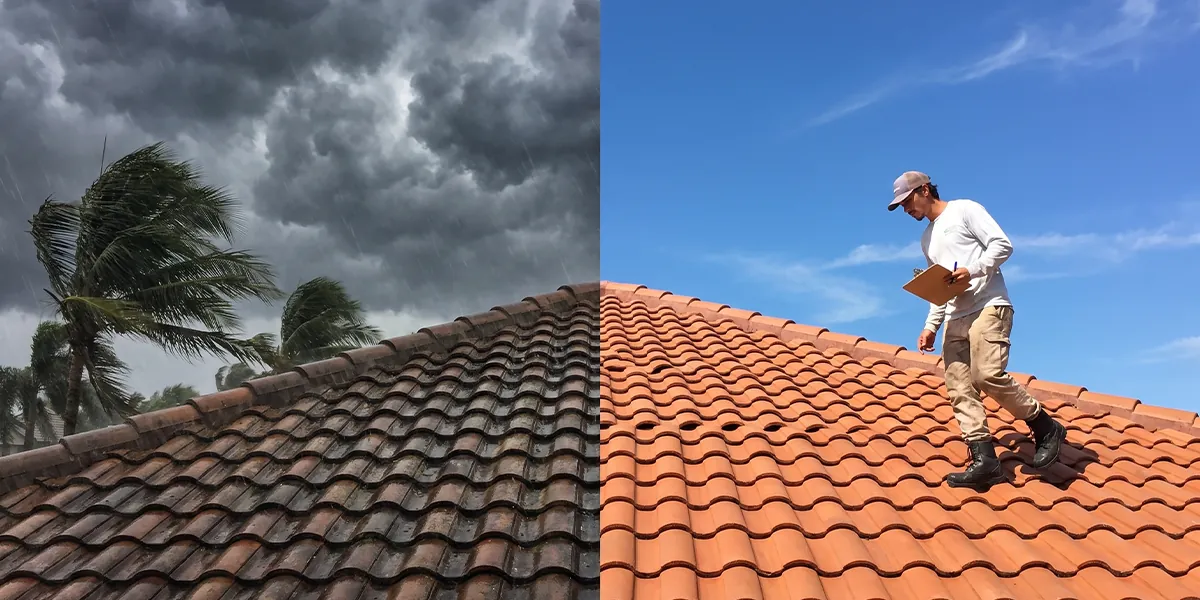
The same valleys and downspouts that matter most after a storm matter just as much before one, since a gutter already clogged with spring debris backs up the moment hurricane rain starts instead of days into the cleanup. Walking the roofline in early June, before the season’s first named storm, and clearing anything sitting in a valley or blocking a downspout takes an afternoon and removes one of the most common causes of water intrusion during heavy wind-driven rain. FEMA’s hurricane preparedness guidance recommends this kind of pre-season roofline check for exactly this reason.
Algae, moss, and lichen do more than discolor a roof. They hold moisture against the tile or shingle surface and roughen the texture enough to catch wind-driven debris that would otherwise slide off a clean roof, so a roof carrying visible growth going into hurricane season is genuinely more exposed than one that was soft washed a few months earlier. That is one of the few cases where a routine cleaning appointment doubles as storm prep instead of pure maintenance.
Every roof sealed with HydroLock already gets an annual drone inspection as part of the five-year guarantee, and timing that inspection for late spring catches loose tile, aging seal lines, or wear that has not caused a problem yet but would under 100 mile-per-hour wind. Homeowners without HydroLock can still request a one-time drone assessment before the season starts, since a lifted tile edge found in May is a five-minute fix and the same lifted edge found after a named storm is often a full tile replacement.
Before anyone touches a ladder, walk the property from the ground and look for downed lines, saturated soil near the foundation, and standing water that suggests drainage is blocked somewhere above. Wind-loosened tile can shift days after the storm passes as the roof deck dries unevenly, so a roof that looked stable the morning after can still move underfoot a week later. If anything on the roofline looks structurally off, sagging, visibly displaced decking, or a section that has pulled away from the fascia, that is a call for a structural assessment before a cleaning conversation even starts.
Loose branches and leaf litter on a flat section of roof can usually wait a day or two without causing damage. Debris packed into a valley or clogging a gutter downspout is different, because trapped water backs up under tile edges and shingle tabs almost immediately, which is exactly the kind of moisture intrusion that turns a cosmetic mess into a real leak. Clearing valleys and downspouts is the one piece of post-storm debris removal that genuinely should not wait.
A pressure washer or soft wash rig showing up on day two feels productive, but if an insurance adjuster has not seen the roof yet, cleaning it first can strip away the exact evidence the claim depends on. Photograph everything before anyone touches a hose, then schedule the cleaning once documentation is done. This section connects directly to the claims process covered later in this guide.
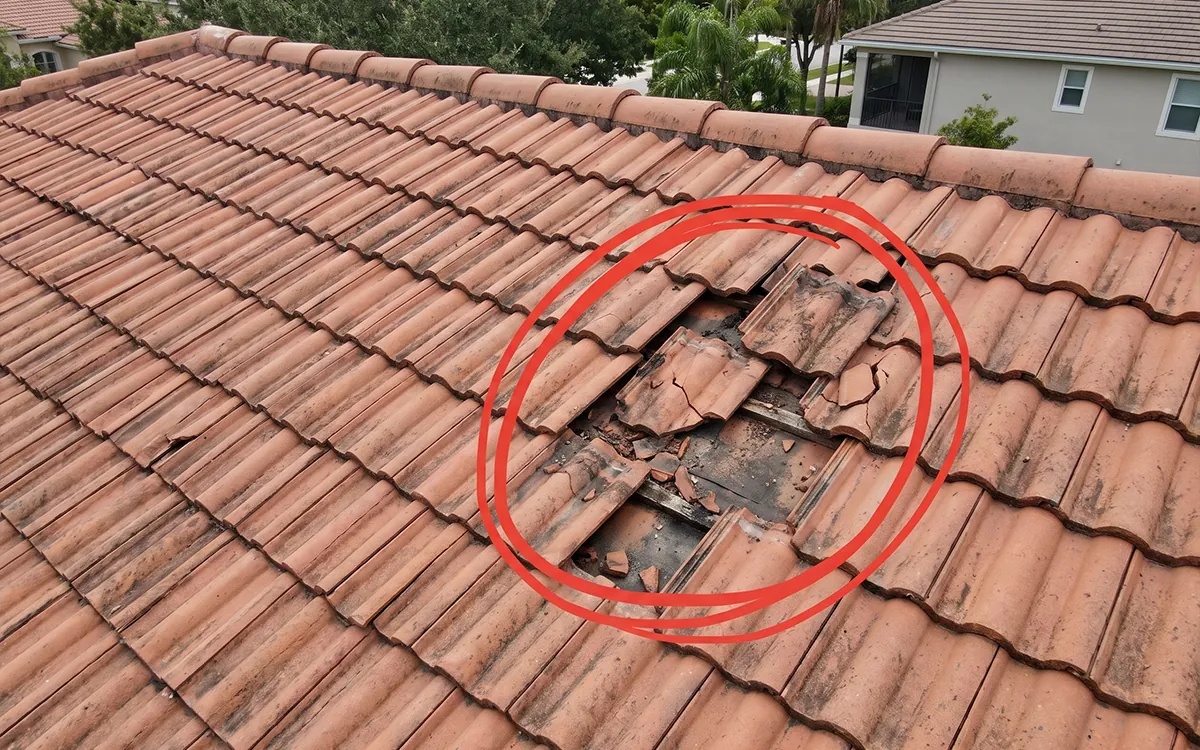
A handful of shifted tiles or a patch of missing shingle granules is common after sustained hurricane-force wind and is rarely a structural issue on its own. What separates a cosmetic repair from a bigger problem is what is underneath: a lifted tile that snapped its mounting foam is a straightforward fix, while a section of decking that flexes or feels soft when walked signals water has already reached the plywood. Fifteen years of Florida roofing work teaches you to check the deck, not just count the missing tiles.
The most misleading part of storm damage is timing. A lifted tile edge or a compromised seal does not always leak the week of the storm, it traps humidity underneath instead, and Sarasota’s climate turns that trapped moisture into visible algae or mold streaking within three to six weeks, long after most homeowners have stopped thinking about the hurricane at all. That delayed growth is why a follow-up inspection at the one-month mark catches problems the initial walk-through misses.
Tile is the visible layer, but the underlayment beneath it is what actually keeps water out, and it is the piece nobody checks unless someone tells them to. A storm can leave the tile itself looking untouched while wind-driven rain works its way under a single cracked or lifted piece and soaks the underlayment below, so an inspection that only looks at the tile from a ladder is missing the layer that determines whether this becomes a leak in six months or stays a non-issue.
Photographing damage from the ground, clearing yard debris, and checking gutters and downspouts from a stable stepladder are all reasonable for a homeowner to handle directly. None of that requires walking on a wet or storm-loosened roof, which is where the real risk starts.
Anything that involves getting onto the roof plane itself belongs to a professional, and that is true even without storm damage in the picture, since Florida tile cracks under foot pressure whether or not it just survived a hurricane. Algae and mold treatment adds another layer: the chemistry has to match the growth type and dwell time correctly, or a homeowner risks stripping a sealer or missing the organism at the root, which brings the same growth back within weeks.
Beyond the safety question, HOA compliance deadlines and the 4-point insurance inspections increasingly required at renewal both carry more weight when the documentation comes from a licensed professional rather than a homeowner’s own photos. A written inspection report from a company that does this daily holds up better in both conversations than a phone photo and a guess.
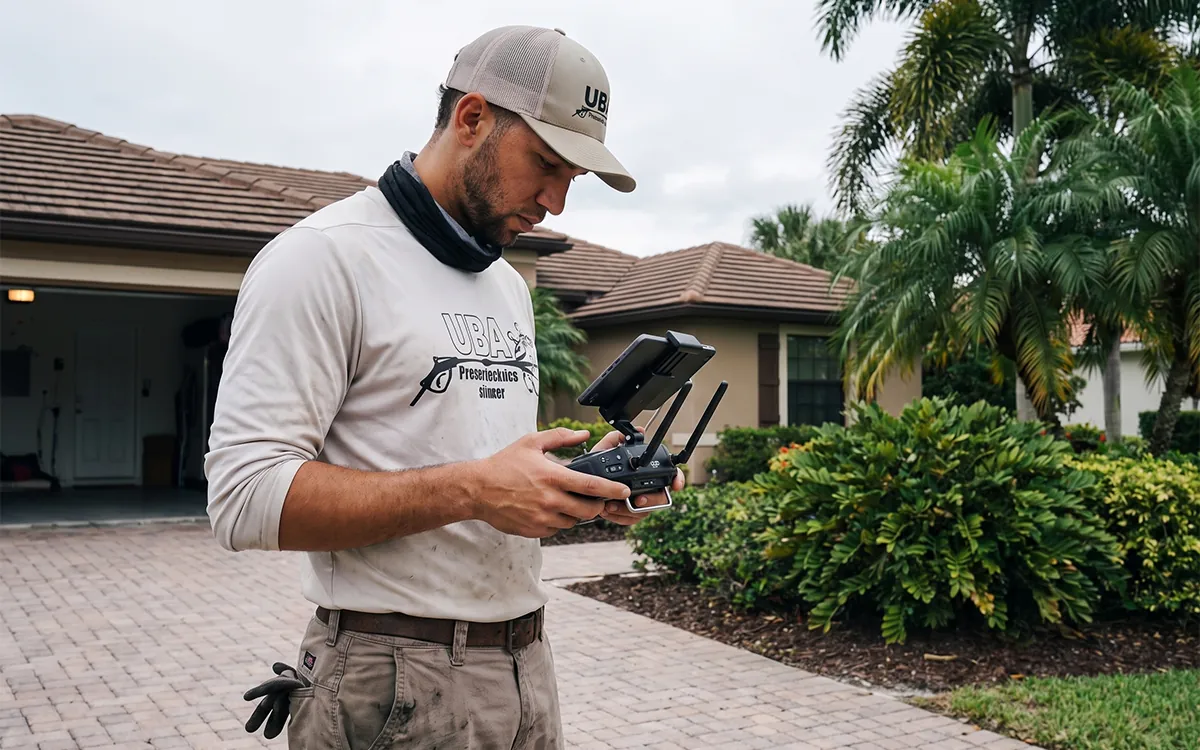
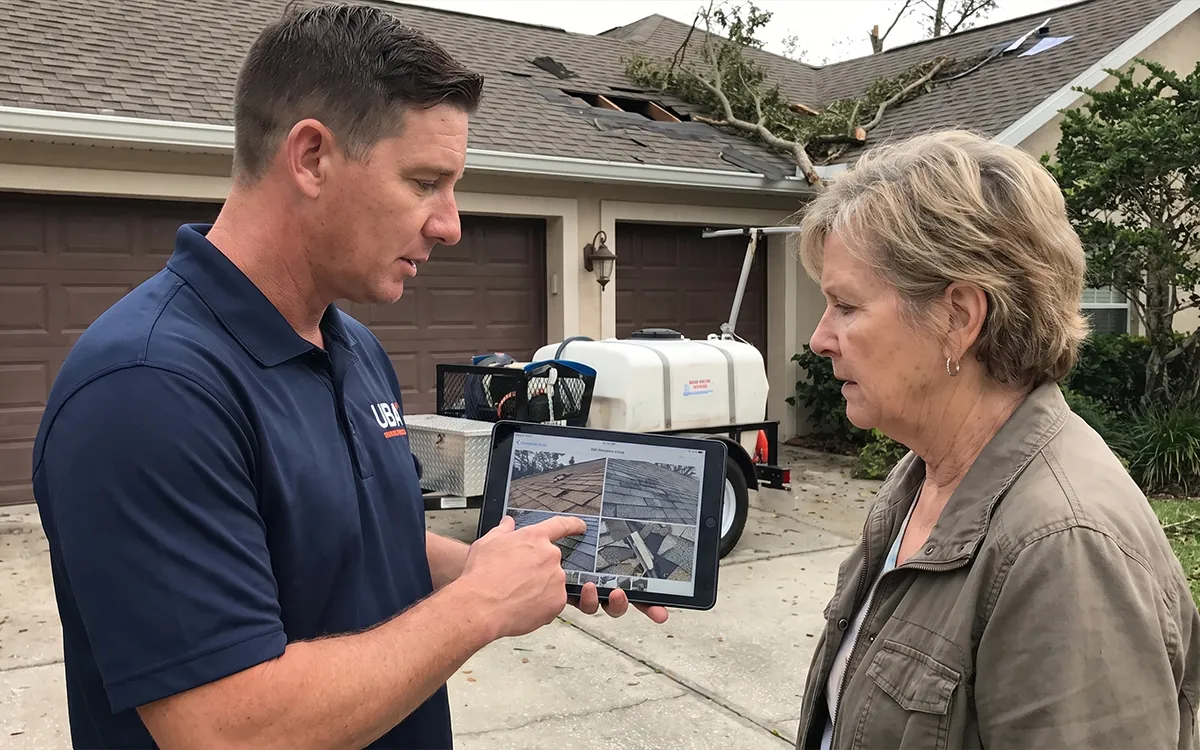
A single vantage point from a ladder shows one section of roof at a time, while a drone pass captures the entire roof plane in one continuous view, which is how a consistent pattern of granule loss or a cluster of lifted tile edges gets caught instead of missed between individual look-ups.
Every HydroLock-sealed roof already gets an annual drone inspection as part of the five-year guarantee, and after a named storm that inspection doubles as a storm damage check for homeowners who sealed before the season started, catching shifted tile or compromised seal lines before they become the kind of moisture problem that shows up as algae a month later.
Wide shots of all four roof planes, close-ups of any visibly displaced or cracked tile, and a few reference shots that show the surrounding property for context all matter more than a single dramatic photo. A smartphone photo carries a timestamp automatically, and that timestamp is often the detail that ties damage to the actual storm date rather than an ambiguous prior condition.
An adjuster evaluates what they can see, and a freshly cleaned roof can look indistinguishable from a roof that was never damaged, which is precisely the scenario that gets a legitimate claim denied or reduced. This is not a hypothetical: it is the single most common reason a genuine storm claim runs into trouble, and it is entirely avoidable by documenting first. The Florida Department of Financial Services’ consumer guidance for storm claims says the same thing: photograph before you touch anything.
A written assessment from UBA, covering what was found and where, adds a dated, professional record to sit alongside the homeowner’s own photos. It is a supplement to an adjuster’s inspection, not a replacement for one, but insurers weigh a documented professional opinion more heavily than an undocumented one.
If the underlayment or decking is compromised, or if tile is cracked and displaced badly enough to need replacement, that is a roofing contractor’s repair job first. UBA’s soft wash cleaning and HydroLock sealing are the right call once the structure underneath is sound, and pushing a cleaning or sealing appointment ahead of a genuine structural repair just delays the fix that actually matters. Being upfront about that distinction is part of the initial on-site assessment, not something homeowners have to figure out on their own.
The pattern that shows up every hurricane season is a homeowner booking the fastest, cheapest cleaning available right after the storm without an inspection first, and the roof looks fine for a few weeks before algae reappears faster than expected, because the underlying moisture the storm introduced was never actually addressed. HydroLock’s five-year guarantee, which covers biological regrowth along with fading, tile slippage, and tile cracking tied to the sealer’s adhesive chemistry, is built for exactly the kind of post-storm resilience that a basic wash alone does not provide.
Late spring, before the season’s first named storm, is the ideal window. Clear gutters and valleys, and if the roof has visible algae or is due for its annual HydroLock drone inspection, get both done before storm activity picks up in June.
Within the first week is reasonable for a visual inspection, once immediate safety hazards like downed lines are cleared. A second inspection at the one-month mark catches the delayed moisture and algae signs that do not show up right away.
Ground-level and gutter debris, yes, if you can reach it safely from a stepladder. Anything that requires walking on the roof plane itself should go to a professional, since Florida tile cracks underfoot even without storm damage involved.
No, and that is the part most homeowners get wrong. A compromised seal or lifted tile edge often traps moisture that does not surface as visible algae or a leak for three to six weeks after the storm.
Before, always. A cleaned roof can look indistinguishable from an undamaged one to an insurance adjuster, and that is one of the most common reasons a legitimate storm claim gets denied or reduced.
A full roof plane in one continuous pass, rather than the single section a ladder view shows at a time, which is how a consistent pattern of granule loss or several lifted tile edges gets caught together instead of missed one by one.
Soft washing removes algae, mold, and surface growth, but it does not repair structural damage. If decking or underlayment is compromised, that needs a roofing contractor first, with cleaning and sealing to follow once the structure is sound.
Yes. HydroLock’s five-year guarantee covers biological regrowth, fading, tile slippage, and tile cracking tied to the sealer’s adhesive chemistry, and roofs sealed before the season get an annual drone inspection that doubles as a storm check afterward.
UBA does not publish fixed prices since storm damage varies too much roof to roof, but an on-site assessment is the fastest way to get an actual number for your specific situation.
Tell us whether you need pre-season prep or a post-storm inspection, and we’ll give you a straight answer on what your roof needs and what it costs.